Native American Jewelry fans and buyers know that silver is a key metal used in their favorite objects of beauty. As prices of silver rise, prices of silver jewelry are likely to follow, as night follows day. We have commented on the situation in this article. The good news is that we are holding firm on our prices, many of which were set when silver prices were one-fourth of what they are today.
Showing posts with label native american jewelry. Show all posts
Showing posts with label native american jewelry. Show all posts
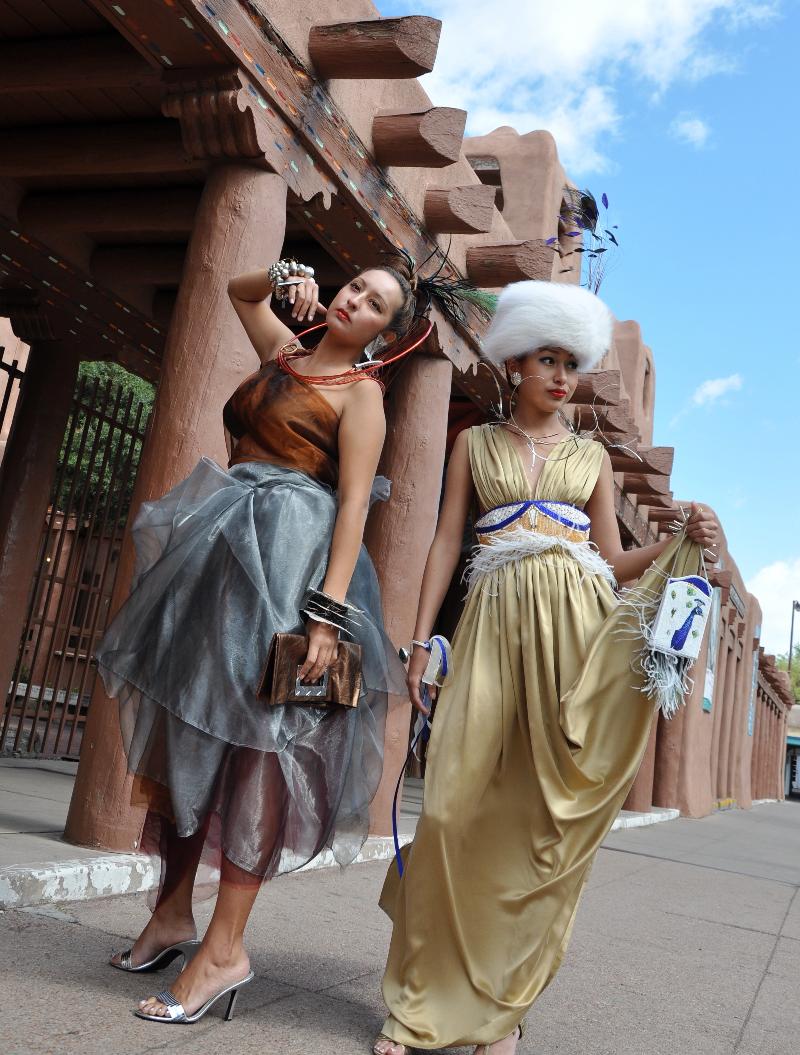
The Museum of Contemporary Native Arts Presents
Opulence
A fashion show and sale featuring Orlando Dugi, Connie Tsosie Gaussoin, David Gaussoin, and
Wayne Nez Gaussoin
(SANTA FE, NM) Santa Fe, NM - The Museum of Contemporary Native Arts (MoCNA) will present Opulence, taking place at the Museum Store and Lloyd Kiva New Gallery, 108 Cathedral Place, Santa Fe, NM. The show exhibition runs from August 5th through August 31st, 2011 with an opening reception on August 18th, 2011 from 4:00-7:00pm.
The exhibition will feature new work by Orlando Dugi, Connie Tsosie Gaussoin, David Gaussoin, and Wayne Nez Gaussoin.
Orlando Dugi referred to Opulence as "Going beyond monetary wealth projecting rich creativity, posh artistry, superior elegance, affluent innovation and above all creating a luxurious image."
MoCNA Gallery Hours:
Monday- Saturday 10:00AM- 5:00PM
Closed on Tuesdays
Brought to you Native American Indian Jewelry,
a website of Aboriginals: Art of the First Person.
A Primer on Old Zuni Pueblo Art
We have recently come across a video that was recorded by Deb Slaney, currently Curator at the Albuquerque Museum, when she was with the Heard Museum, Phoenix.
It is a fascinating discussion of the background of the C.G. Wallace Collection and the artists and work represented in it.
This link will take you to it on YouTube. http://youtu.be/0J1Kwij6PJs
As collectors, dealers and students of Native American jewelry, and Zuni art particularly, we are always interested in learning more about the history of Zuni jewelry and carvings, and the techniques of the artists who created it a generation ago.
It is a fascinating discussion of the background of the C.G. Wallace Collection and the artists and work represented in it.
This link will take you to it on YouTube. http://youtu.be/0J1Kwij6PJs
As collectors, dealers and students of Native American jewelry, and Zuni art particularly, we are always interested in learning more about the history of Zuni jewelry and carvings, and the techniques of the artists who created it a generation ago.
A Pleasure to meet a NEW Native American artist.
One of the great treats of this vocation/avocation is the opportunity to meet new artists. It is especially rewarding when you do so in unexpected places.
We decided to go the the Native American art show in Cape Coral, FL. It is the next town over from us and we were curious about what kind of a crowd and exhibitors it would attract.
The crowd was small, but enthusiastic on a beautiful, cool Florida day. There were Indian dancers. I shot a video of some of the action. It will be posted here shortly.
First, however, I want to introduce you to the work of an artist we met for the first time at this event.
Her name is Suzie Longhair. She is a Cocopah Indian, which describes as a tribe related to the Maricopa. Her ancestral home is in Arizona.
We were struck by her work in a genre we had not seen before. She gathers shells and beads and other found items into works of Native American jewelry art.
They are hand-sewn to pieces of fabric with pin mechanisms and hooks so that the may be worn as pins or attached to chain or string as pendant.

Bonus time: Each of these unique creations comes with complimentary-colored fabric pouch to keep it safe in a jewelry drawer. No extra charge.
If you are interested, don't delay. These are the only ones we have of these. And we can still get one to you by Christmas if you act now.
We decided to go the the Native American art show in Cape Coral, FL. It is the next town over from us and we were curious about what kind of a crowd and exhibitors it would attract.
The crowd was small, but enthusiastic on a beautiful, cool Florida day. There were Indian dancers. I shot a video of some of the action. It will be posted here shortly.
First, however, I want to introduce you to the work of an artist we met for the first time at this event.
Her name is Suzie Longhair. She is a Cocopah Indian, which describes as a tribe related to the Maricopa. Her ancestral home is in Arizona.
We were struck by her work in a genre we had not seen before. She gathers shells and beads and other found items into works of Native American jewelry art.
They are hand-sewn to pieces of fabric with pin mechanisms and hooks so that the may be worn as pins or attached to chain or string as pendant.
Here are four that we picked up to offer to you. This one is a slice of brown-tinged ammonite surrounded by beads
in complimentary purples. It has both a pin and a pendant loop
attached to the fabric back. The size is 2" x 2 1/2".
It will be $135 when it gets posted to our web site.
If you purchase it here, it's yours for $115.

 This one is a slice of brown-tinged ammonite surrounded by beads
in complimentary purples. It has both a pin and a pendant loop
attached to the fabric back. The size is 2" x 2 1/2".
It will be $135 when it gets posted to our web site.
If you purchase it here, it's yours for $115.

This one is a bit eclectic, combining as it does a replica of an
African mask with complimentary shells and beads.
The size is 2 3/4" x 2 3/4". It will be $165
when it gets to our web site. Right now it is $150.

African mask with complimentary shells and beads.
The size is 2 3/4" x 2 3/4". It will be $165
when it gets to our web site. Right now it is $150.

This one is predominantly golden in hue. (Sorry about the photo;
I can sendbetter if you request it.) It is 3 1/4" x 2 3/4"
and is done in the form of a butterfly.Once it gets
to the web site it will be $155. Buy it now for $140.
I can sendbetter if you request it.) It is 3 1/4" x 2 3/4"
and is done in the form of a butterfly.Once it gets
to the web site it will be $155. Buy it now for $140.

Perhaps the most striking is the ultra-elegant dragonfly done
in all black beads and bits. The dragonfly is highly revered
in native culture as a harbinger of rain. This pin/pendant
will be $125. An early bird will get the dragonfly for $110.
in all black beads and bits. The dragonfly is highly revered
in native culture as a harbinger of rain. This pin/pendant
will be $125. An early bird will get the dragonfly for $110.
Bonus time: Each of these unique creations comes with complimentary-colored fabric pouch to keep it safe in a jewelry drawer. No extra charge.
If you are interested, don't delay. These are the only ones we have of these. And we can still get one to you by Christmas if you act now.
Free Shipping of Native American art & jewelry
As the year-end holidays roll towards us, many of you are thinking of what to give your favorite aunt or friend or even children. (We have one client who buys a new fetish carving for her son every year as a way of encouraging him to appreciate Native American art and culture and to get him into collecting.)
When you visit our web sites at ZuniLink and Native-JewelryLink, please keep in mind that we will pay for shipping to you or the person you are giving to, from now through December 15. Pre-Christmas delivery is guaranteed if we receive your paid order by December 15.
We also guarantee satisfaction through January 5 so that you or gift your receivers can change your minds about any piece you order.
We also will provide free shipping for most items of Arctic and Navajo folk art at TribalWorks. If you see something you like ask about our shipping policy for the Holidays. We will work with you.
Thank you and please have a grateful Thanksgiving.
When you visit our web sites at ZuniLink and Native-JewelryLink, please keep in mind that we will pay for shipping to you or the person you are giving to, from now through December 15. Pre-Christmas delivery is guaranteed if we receive your paid order by December 15.
We also guarantee satisfaction through January 5 so that you or gift your receivers can change your minds about any piece you order.
We also will provide free shipping for most items of Arctic and Navajo folk art at TribalWorks. If you see something you like ask about our shipping policy for the Holidays. We will work with you.
Thank you and please have a grateful Thanksgiving.
Go Pink for the Cure with this Pink Shell Native American necklace
In support of Susan G. Komen for the Cure, Aboriginals: Art of the First Person will donate 40% of the purchase price of this stunning sterling silver and pink shell Navajo necklace to the Susan G. Komen for the Cure Organization's efforts to find a cure for breast cancer.

Adorn yourself or someone you love with this elegant choker-style necklace and Susanne Waites, proprietor of Aboriginals: Art of the First Person and operator of the web site, Native-JewelryLink will donate 40% of the purchase price to this worthwhile cause. The contribution will be made in the name of the purchaser.
When others notice your necklace you can use it as an opportunity extend awareness of the Susan G. Komen for the Cure efforts.
You can see an enlarged photo of this beautiful piece of authentic, Native American Navajo jewelry by clicking on the photo above.
Adorn yourself or someone you love with this elegant choker-style necklace and Susanne Waites, proprietor of Aboriginals: Art of the First Person and operator of the web site, Native-JewelryLink will donate 40% of the purchase price to this worthwhile cause. The contribution will be made in the name of the purchaser.
When others notice your necklace you can use it as an opportunity extend awareness of the Susan G. Komen for the Cure efforts.
You can see an enlarged photo of this beautiful piece of authentic, Native American Navajo jewelry by clicking on the photo above.
Tribal Art - Final Days for 35% off Native American jewelry sale

This fabulous Charlene Reano, Santo Domingo necklace was purchased for 35% off during Native American jewelry sale.

The purchaser was almost breathless when she discovered the sale. That sentiment was apparent when she notified us that it arrived at her home.
There still are many similarly beautiful and bargain priced pieces available at 35% off the list price.
But only for six more days. We have extended the closing date for the sale through Saturday, June 27, 2009.
Our recommendation? Visit the website at Native-JewelryLink.com by clicking on this link, surf through cases and find something you can't resist at 35% off.
Place your order by Saturday and we will automatically reduce the listed price by 35%.
Tribal Artery - Mashantucket Pequot Schemitzun cancelled
The Mashantucket Pequot tribe of Connecticut has announced that it's annual pow-wow event, Schemitzun, has canceled the event for 2009. According to Lori Potter, a spokesperson for the tribe made the announcement while indicating that it was part of the tribal governements plans to reduce expenses in this time of economic stress.
The Mashantucket Pequot also operate the Native America casino called Foxwoods Resort Casino. The event, also known as the Feast of Green Corn and Dance, was launched in 1992. It has been held at the Miner Farm on Winecthog Hill Road, North Stonington , CT. where hundrds of Native Americans competed in dances and rodeo acts, and native American booths sold art, clothing and jewelry. There also were demonstrations of various Native American crafts.
In canceling the event, the tribe graciously thanked all those who had participated in the event and supported it in the past.
It is unclear whether or not the event will be reinstated when economic conditions improve.
Aboriginals:Art of the First Person, owners of websites that feature Native American art, carvings, pottery and jewelry, regrets the loss of a major event such as this. We big fans of powwows and encourage all our readers to patronize any that are held where you live or visit.
The Mashantucket Pequot also operate the Native America casino called Foxwoods Resort Casino. The event, also known as the Feast of Green Corn and Dance, was launched in 1992. It has been held at the Miner Farm on Winecthog Hill Road, North Stonington , CT. where hundrds of Native Americans competed in dances and rodeo acts, and native American booths sold art, clothing and jewelry. There also were demonstrations of various Native American crafts.
In canceling the event, the tribe graciously thanked all those who had participated in the event and supported it in the past.
It is unclear whether or not the event will be reinstated when economic conditions improve.
Aboriginals:Art of the First Person, owners of websites that feature Native American art, carvings, pottery and jewelry, regrets the loss of a major event such as this. We big fans of powwows and encourage all our readers to patronize any that are held where you live or visit.
Tribal Art - Saving the Planet online
Whether or not you believe in man-made global warming – personally, I am an agnostic - it turns out that you may be reducing your impact on the planet by purchasing items online instead of in-person.
The Carnegie Mellon Green Design Institute put together a study that purports to prove that e-commerce not only uses less energy but also reduces the carbon footprint of retailing by one-third vs. bricks-and-mortar retailing.
The team, led by H. Scott Matthews, compared energy consumption and CO2 emissions required to deliver a small thumb drive to a customer via a shopping trip to a store vs. buying and shipping from an online site.
According to the study, as reported in the Wall Street Journal, the highest environmental cost of traditional shopping is the drive by car to the store. (This was based on an estimate of an average shopping round-trip being 14 miles, with three different items purchased on a trip.)
But what about the environmental cost of delivery to you home? The researchers determined that the “last-mile” cost of delivering a package as part of a
Okay, what about the cost of data centers and computers? Well, it turns out that, on average the incremental costs of running data centers and computers, beyond the energy costs that are incurred by businesses tracking inventory and consumers using computers for other tasks, is insignificant.
To be fair, the extra packaging to ship safely adds mare cost than carrying an item home in shopping bag. In addition, using air mail or personalized express shipping options can increase the impact on the environment. On the other hand, using the postal service3 to ship has almost no incremental cost since the time and resources are already being used for normal mail delivery.
There is one way the traditional retailing has less impact on the environment than e-commerce; if you walk to the store. Of course, that seldom applies to shopping for tribal art since so few of us live down he stet from a tribal art gallery.
While we are on the subject of tribal art, let’s reflect on its benign environmental impact.
Very little if any non-renewable energy is used in the making of tribal art. True, some Native American carvers use electrically-driven carving tools. But then they start with natural materials, stone, wood, semi-precious gems, silver, gold and clay with very little energy expended in manufacturing and very little wasted material.
For example, Native American potters create their works the traditional way. They mine the clay by hand. They form it by hand. They fire in pits using wood. They polish by hand with smoothing stones.
Finally, buying tribal art supports a process and practice that has been place for generations, and the artists who were among the first to recognize the importance of honoring Mother Earth.
This report is brought to you by Susanne and William Waites, proprietors of Aboriginals: Art of the First Person, with Web sites at ZuniLink.com, featuring Zuni and other Native American carvings; Native-JewelryLink.com, featuring the finest in Native American Indian jewelry; Native-PotteryLink, featuring handmade Indian pottery from Native Pueblos; and TribalWorks.com, combining triabl art from African, Australian Aboriginal art, Arctic art and Navajo folk art.
We are gratified to be able to bring this outstanding tribal work to your attention, on behalf of the artists (and the planet).
A Trillion Websites
Have you ever wondered why you can't find the web site you are looking for? It concerns us, especially if you are looking for us.
It turns out that, according to Google, there are now one trillion web sites. 1,000,000,000,000.
Not web pages. There are many more of those since many web sites have several pages within them. In fact, Google says the number of pages grows by several billion everyday.
So, just imagine. You enter a search term, say "Native American Jewelry".
Google has to search through its index of a trillion (and growing) web sites to find a few million that will be appropriate to your search term.
What do think the odds are that they will return web sites you are looking for, including ours?
All hope is not lost.
You can improve the chances of finding the site and information you seek if you enter a more extensive search term. This allows Google to discard sites that might answer your broader request but are not what you are looking for.
If you change your search term to "Native American Indian jewelery" you will get closer. If you add "turquoise", the search will get you closer still. Add the word "pendant" or "bracelet" or "necklace" and you will get closer still.
There are a couple more strategies. Enter the actual web site URL (name) you are looking for, in our case, "Native-JewelryLink", and Google will bring up our site in first or second position on the first page.
Alternatively, you can just enter our address, http://www.Native-JewelryLink.com , in your browser window and you will go directly to our site.
One more thing: You also can help us be more visible to others who may be looking for us or what we offer. If you have a personal web site, you can put a link on it to our web site. Similarly, if you publish a personal blog, you can enter a link to our site in it. (You could also include some nice words about us, if you are so inclined.- Smile)
Since Google considers every link to a web site as a vote of confidence in the contents of that site, your link will help Google find us and will suggest to them that we should show up higher in the result when someone searches for Native American Indian jewelry.
We will deeply appreciate any such links. Just let us know that you are doing it.
Thank you. Susanne and William Ernest Waites, Aboriginals Gallery
It turns out that, according to Google, there are now one trillion web sites. 1,000,000,000,000.
Not web pages. There are many more of those since many web sites have several pages within them. In fact, Google says the number of pages grows by several billion everyday.
So, just imagine. You enter a search term, say "Native American Jewelry".
Google has to search through its index of a trillion (and growing) web sites to find a few million that will be appropriate to your search term.
What do think the odds are that they will return web sites you are looking for, including ours?
All hope is not lost.
You can improve the chances of finding the site and information you seek if you enter a more extensive search term. This allows Google to discard sites that might answer your broader request but are not what you are looking for.
If you change your search term to "Native American Indian jewelery" you will get closer. If you add "turquoise", the search will get you closer still. Add the word "pendant" or "bracelet" or "necklace" and you will get closer still.
There are a couple more strategies. Enter the actual web site URL (name) you are looking for, in our case, "Native-JewelryLink", and Google will bring up our site in first or second position on the first page.
Alternatively, you can just enter our address, http://www.Native-JewelryLink.com , in your browser window and you will go directly to our site.
One more thing: You also can help us be more visible to others who may be looking for us or what we offer. If you have a personal web site, you can put a link on it to our web site. Similarly, if you publish a personal blog, you can enter a link to our site in it. (You could also include some nice words about us, if you are so inclined.
Since Google considers every link to a web site as a vote of confidence in the contents of that site, your link will help Google find us and will suggest to them that we should show up higher in the result when someone searches for Native American Indian jewelry.
We will deeply appreciate any such links. Just let us know that you are doing it.
Thank you. Susanne and William Ernest Waites, Aboriginals Gallery
New Jewelry Book Signing at SWAIA Indian Market
Southwestern Association for American Indian Art has announced that a special book signing party will be offered on August 21, 2008, at Shiprock Santa Fe, 53 Old Santa Fe Trail, in conjunction with this year's Santa Fe Indian Market.
Dr. Dexter Cirrillo will sign his recently published, Southwestern Indian Jewelry, a sequel to highly regarded earlier volume of the same title. Signed copies of both books will be available for purchase at the event with proceeds going to SWAIA. SWAIA members will receive a 10% discount of the regular price of $55. Evidence of current membership must be presented.
The event will be held from 4 pm until 7 pm.
~~~~~~~~
This notice is presented as a public service by Susanne and William Ernest Waites, who9 will be blogging at this site from Indian Market this year. Waites' maintain four tribal art websites at Native-JewelryLink, Native-PotteryLink, TribalWorks and ZuniLink.
Dr. Dexter Cirrillo will sign his recently published, Southwestern Indian Jewelry, a sequel to highly regarded earlier volume of the same title. Signed copies of both books will be available for purchase at the event with proceeds going to SWAIA. SWAIA members will receive a 10% discount of the regular price of $55. Evidence of current membership must be presented.
The event will be held from 4 pm until 7 pm.
~~~~~~~~
This notice is presented as a public service by Susanne and William Ernest Waites, who9 will be blogging at this site from Indian Market this year. Waites' maintain four tribal art websites at Native-JewelryLink, Native-PotteryLink, TribalWorks and ZuniLink.
Native American earrings on sale - 30% off
Now through July 28, 2008, you can save 30% off the listed price of any and every earrings pair in our Native-JewelryLink inventory.
Every pair - posts, clips, wires - is included. Silver, gold, inlay, channelwork, turquoise, lapis, coral, shell. If you find it and you love it, you'll get 30% off.
Start by visiting this page and clicking on one of the Native American Indian earring index page links.
Find the earrings you want. Place your order through our secure order form or by calling us at 800-305-0185 (8 AM to 8 PM Eastern Time). Tell us you want the sale discount and we will deduct 30% from your earring order.
You can pay by Paypal or any major credit card. Or use our Collector's Club layaway.
It's that simple.
Don't wait to the last minute. At this discount, great buys will go fast.
Every pair - posts, clips, wires - is included. Silver, gold, inlay, channelwork, turquoise, lapis, coral, shell. If you find it and you love it, you'll get 30% off.
Start by visiting this page and clicking on one of the Native American Indian earring index page links.
Find the earrings you want. Place your order through our secure order form or by calling us at 800-305-0185 (8 AM to 8 PM Eastern Time). Tell us you want the sale discount and we will deduct 30% from your earring order.
You can pay by Paypal or any major credit card. Or use our Collector's Club layaway.
It's that simple.
Don't wait to the last minute. At this discount, great buys will go fast.
Did you know Dru?
Dru Anne Doyle, formerly Director of Merchandising and Product Development at the Eiteljorg Museum of American Indians and Western Art in Indianapolis and now Manager of Sales and Marketing at Ocean's Reach Condominium Association on Sanibel Island Florida, has been elected as a member of the Board of Directors of the Sanibel-Captiva Chamber of Commerce.
Dru left her museum post in Indianapolis to settle on Sanibel in 2007. We remember her well from the various shows and events where we would see her when she was a buyer for the Eiteljorg and we were buying for our websites at ZuniLink, Native-JewelryLink and Native-PotteryLink .
Since I also am a member of the Sanibel-Captiva Chamber board, I look forward to seeing her very smiling face and positive view of life at future meetings. (But, of course, we miss her in the Native and Tribal Arts field.)
Dru left her museum post in Indianapolis to settle on Sanibel in 2007. We remember her well from the various shows and events where we would see her when she was a buyer for the Eiteljorg and we were buying for our websites at ZuniLink, Native-JewelryLink and Native-PotteryLink .
Since I also am a member of the Sanibel-Captiva Chamber board, I look forward to seeing her very smiling face and positive view of life at future meetings. (But, of course, we miss her in the Native and Tribal Arts field.)
How to Keep Your Native American Jewelry Fresh and Beautiful.
Native American jewelry is not something most people "just buy". Normally, extensive thought and care go into choosing what pin, pendant, bracelet or necklace you will add to your adornment options.
Strangely, thoughtful care often becomes an afterthought when the object of your affection has been acquired.
If you treat your jewelry carelessly, however, you may be unhappy with how it looks when you take it from your jewelry box to wear on a special occasion.
Just how do you keep Native American Indian jewelry looking fresh, clean, sparkly and vibrant?
Let's start with the metals.
Solid silver is too soft to be used in most jewelry. To give silver strength, it is combined with another metal, usually copper. The result is "Sterling Silver", if at least 92.5% silver is in the alloy. Having achieved that state, it should be stamped with the words "sterling" or STR. That is the best indicator that the silver in your jewelry is, in fact, jewelry-grade sterling silver.
Gold is another soft metal occasionally used in Native American jewelry. Admittedly, less gold is used these days because its cost exceeds most Native American jewelry-maker's limited budgets. It also is too soft to be used unalloyed.
Gold is classified by the proportion of its combination with strengthening metals. 24 karat gold is solid gold. 22 karat gold is 22 parts gold to 2 parts of some other metal. 18 karat gold is 18 parts gold to 6 parts hardening metal. In the US, less than 10 karats cannot legally be described as gold.
Both silver and gold, even when alloyed, are very soft and easily scratched if mishandled.
Keep individual items of gold or silver jewelry in separate containers. Avoid letting them to rub against one another. The best protection is to wrap each piece in jeweler's tissue and place each in a separate sealable plastic bag. For silver, this has the added value of discouraging tarnish.
The most commonly used stones in Native American jewelry are turquoise, coral, lapis lazuli, shell, malachite, gaspeite, jet, amber, sugilite, opal and mother of pearl. All of these are also very soft, although harder than silver and gold. But they are no match for diamonds and other gem stones, such as rubies and emeralds, which may be found in other jewelry.
It is sensible to buffer every piece of jewelry from other pieces in the same container, especially if they are stored with jewelry containing harder gem stones. Use cotton cloth or tissue to protect the pieces, especially if traveling, when the carriers can be jostled.
Safe cleaning of jewelry requires some specific cautions. The best cleaning materials are warm water with or without a small amount of liquid soap. In any case, do not soak the item for more than a few minutes in order to avoid discoloration of the stones.
Some companies promote commercial cleaners as safe for jewelry. It may be true or it may not. At least, read the instructions carefully before using to be sure a commercial cleaner can used with the stone or metal you are cleaning. Personally, I prefer to err on the side of caution and only use a commercial cleaner when the process recommended above is insufficient.
Ultrasonic cleaners, which may be safe for diamonds and other harder gem stones, are not safe for turquoise, coral, malachite or similar materials used in Native American jewelry.
Do not use bleach or any strong cleaners to clean jewelry with turquoise, coral, malachite or similarly soft stones. Bleach can discolor the stone or cause its vibrancy to fade.
For the same reason, do not wear jewelry in a swimming pool or hot tub. The chlorine or bromine used to disinfect pool water is unsafe for the most stones in Native American jewelry.
Silver and gold jewelry is best cleaned a soft cloth, such as a polishing cloth specifically made for the purpose. I encourage you to pick up polishing cloths either when you buy the jewelry or before you clean it. Some Native American jewelry dealers, such as <>Beaded necklaces should be stored flat in order to avoid the thread from stretching. Stretched threads can break. That can be tragic with a beaded necklace.
Inlay and channel work require special care. Inlay is a Native American jewelry technique in which individual stones are cut to prescribed sizes and shapes so that they can be set against each other within the bezel or metal lip that will hold them. Inlay work is extremely delicate and requires great skill.
Channel work is an allied technique, in which the stone pieces are set within silver or gold channels. Channel work, while also demanding, is somewhat more forgiving for the person cutting and setting the stones, because of the metal around each piece of stone.
Do not attempt to reshape or bend a bracelet, choker or pendant, or resize a ring with inlay or channel work. Changing the shape of the underlying metal can loosen the stones. At worst, they can actually pop while the item is being bent. At best, the integrity of the setting is compromised so that a jar or jolt can cause stones to dislodge.
If this happens to a piece of jewelry you have acquired, it is best to return it to the original artist for resetting. It is important, therefore, to keep a record of where you bought the item and, if known, the name of the artist.
Remove jewelry when doing housecleaning or other chores around the house, such as gardening. Dirt can get into stone settings and scratching of surfaces is more likely when you are preoccupied with the activity.
Wait until after makeup has been applied or hairspray has been used before putting jewelry on. These can contain substances that are harmful to jewelry. Keeping your jewelry clean is easier than cleaning it, and it makes it easier to cleaning when you must do so.
When cleaning jewelry, it is safer to do so over a small bowl of cleaning solution and a bowl of clear rinse water than over the sink. A dropped piece of jewelry can be scratched by the sink material and a loose stone can be lost down a drain. Some experts suggest placing a strainer over the drain if you are required to use running water to rinse the item.
Do not change jewelry over a tile or wood floor. If you should be unlucky enough to drop a piece and it hits the hard floor it could be damaged. A soft carpet or a bedspread is much more forgiving.
If you have several pieces of valuable jewelry, I recommend acquiring a safe in which to store them when not being worn. Of course, nothing will completely stop a determined thief or burglar, but a safe may slow the perpetrator long enough protect your possessions. The safe should also have a high fire rating so that your precious metals and stones will be protected from heat if a fire breaks out near the safe.
When washing up, do not place your jewelry on a shelf over the sink or in direct sunlight for an extended period. Do not cook over a hot surface or flame while wearing jewelry. Even a modest amount of heat can damage the stones.
Do not keep opals or pearls in plastic bags. They need to breathe.
Never use toothpaste or any other abrasive to clean jewelry. What's effective for teeth can scratch jewelry.
Traveling? As indicated, always pack your jewelry items so that they are protected from one another in transit. I would never pack them in checked baggage. That is asking for trouble. It is much safer to carry them on you person or in carry on luggage where you can keep an eye them.
Native American jewelry is created by skilled artisans based on generations of tradition and embraced by great passion and love for the items and their components. When you buy and wear any Native American-made necklace, bracelet, pin, pendant or pair of earrings, you are carrying forward a tradition of love and beauty. Following the preceding guidelines will mean that your Native American jewelry will please you for years to come.
About the Author
~~~~~~~~~~~~~~~~~~~~~
This article was written by me for general publication by anyone else who wants to pick it up. You read it here first.
Strangely, thoughtful care often becomes an afterthought when the object of your affection has been acquired.
If you treat your jewelry carelessly, however, you may be unhappy with how it looks when you take it from your jewelry box to wear on a special occasion.
Just how do you keep Native American Indian jewelry looking fresh, clean, sparkly and vibrant?
Let's start with the metals.
Solid silver is too soft to be used in most jewelry. To give silver strength, it is combined with another metal, usually copper. The result is "Sterling Silver", if at least 92.5% silver is in the alloy. Having achieved that state, it should be stamped with the words "sterling" or STR. That is the best indicator that the silver in your jewelry is, in fact, jewelry-grade sterling silver.
Gold is another soft metal occasionally used in Native American jewelry. Admittedly, less gold is used these days because its cost exceeds most Native American jewelry-maker's limited budgets. It also is too soft to be used unalloyed.
Gold is classified by the proportion of its combination with strengthening metals. 24 karat gold is solid gold. 22 karat gold is 22 parts gold to 2 parts of some other metal. 18 karat gold is 18 parts gold to 6 parts hardening metal. In the US, less than 10 karats cannot legally be described as gold.
Both silver and gold, even when alloyed, are very soft and easily scratched if mishandled.
Keep individual items of gold or silver jewelry in separate containers. Avoid letting them to rub against one another. The best protection is to wrap each piece in jeweler's tissue and place each in a separate sealable plastic bag. For silver, this has the added value of discouraging tarnish.
The most commonly used stones in Native American jewelry are turquoise, coral, lapis lazuli, shell, malachite, gaspeite, jet, amber, sugilite, opal and mother of pearl. All of these are also very soft, although harder than silver and gold. But they are no match for diamonds and other gem stones, such as rubies and emeralds, which may be found in other jewelry.
It is sensible to buffer every piece of jewelry from other pieces in the same container, especially if they are stored with jewelry containing harder gem stones. Use cotton cloth or tissue to protect the pieces, especially if traveling, when the carriers can be jostled.
Safe cleaning of jewelry requires some specific cautions. The best cleaning materials are warm water with or without a small amount of liquid soap. In any case, do not soak the item for more than a few minutes in order to avoid discoloration of the stones.
Some companies promote commercial cleaners as safe for jewelry. It may be true or it may not. At least, read the instructions carefully before using to be sure a commercial cleaner can used with the stone or metal you are cleaning. Personally, I prefer to err on the side of caution and only use a commercial cleaner when the process recommended above is insufficient.
Ultrasonic cleaners, which may be safe for diamonds and other harder gem stones, are not safe for turquoise, coral, malachite or similar materials used in Native American jewelry.
Do not use bleach or any strong cleaners to clean jewelry with turquoise, coral, malachite or similarly soft stones. Bleach can discolor the stone or cause its vibrancy to fade.
For the same reason, do not wear jewelry in a swimming pool or hot tub. The chlorine or bromine used to disinfect pool water is unsafe for the most stones in Native American jewelry.
Silver and gold jewelry is best cleaned a soft cloth, such as a polishing cloth specifically made for the purpose. I encourage you to pick up polishing cloths either when you buy the jewelry or before you clean it. Some Native American jewelry dealers, such as <>Beaded necklaces should be stored flat in order to avoid the thread from stretching. Stretched threads can break. That can be tragic with a beaded necklace.
Inlay and channel work require special care. Inlay is a Native American jewelry technique in which individual stones are cut to prescribed sizes and shapes so that they can be set against each other within the bezel or metal lip that will hold them. Inlay work is extremely delicate and requires great skill.
Channel work is an allied technique, in which the stone pieces are set within silver or gold channels. Channel work, while also demanding, is somewhat more forgiving for the person cutting and setting the stones, because of the metal around each piece of stone.
Do not attempt to reshape or bend a bracelet, choker or pendant, or resize a ring with inlay or channel work. Changing the shape of the underlying metal can loosen the stones. At worst, they can actually pop while the item is being bent. At best, the integrity of the setting is compromised so that a jar or jolt can cause stones to dislodge.
If this happens to a piece of jewelry you have acquired, it is best to return it to the original artist for resetting. It is important, therefore, to keep a record of where you bought the item and, if known, the name of the artist.
Remove jewelry when doing housecleaning or other chores around the house, such as gardening. Dirt can get into stone settings and scratching of surfaces is more likely when you are preoccupied with the activity.
Wait until after makeup has been applied or hairspray has been used before putting jewelry on. These can contain substances that are harmful to jewelry. Keeping your jewelry clean is easier than cleaning it, and it makes it easier to cleaning when you must do so.
When cleaning jewelry, it is safer to do so over a small bowl of cleaning solution and a bowl of clear rinse water than over the sink. A dropped piece of jewelry can be scratched by the sink material and a loose stone can be lost down a drain. Some experts suggest placing a strainer over the drain if you are required to use running water to rinse the item.
Do not change jewelry over a tile or wood floor. If you should be unlucky enough to drop a piece and it hits the hard floor it could be damaged. A soft carpet or a bedspread is much more forgiving.
If you have several pieces of valuable jewelry, I recommend acquiring a safe in which to store them when not being worn. Of course, nothing will completely stop a determined thief or burglar, but a safe may slow the perpetrator long enough protect your possessions. The safe should also have a high fire rating so that your precious metals and stones will be protected from heat if a fire breaks out near the safe.
When washing up, do not place your jewelry on a shelf over the sink or in direct sunlight for an extended period. Do not cook over a hot surface or flame while wearing jewelry. Even a modest amount of heat can damage the stones.
Do not keep opals or pearls in plastic bags. They need to breathe.
Never use toothpaste or any other abrasive to clean jewelry. What's effective for teeth can scratch jewelry.
Traveling? As indicated, always pack your jewelry items so that they are protected from one another in transit. I would never pack them in checked baggage. That is asking for trouble. It is much safer to carry them on you person or in carry on luggage where you can keep an eye them.
Native American jewelry is created by skilled artisans based on generations of tradition and embraced by great passion and love for the items and their components. When you buy and wear any Native American-made necklace, bracelet, pin, pendant or pair of earrings, you are carrying forward a tradition of love and beauty. Following the preceding guidelines will mean that your Native American jewelry will please you for years to come.
About the Author
William Ernest Waites and his wife, Susanne, have owned and operated a Native American jewelry dealership and tribal art business for 25 years, first in Chicago and most recently in Florida. Their online gallery of Native American jewelry is at Native-JewelryLink.com
Article Source: Content for Reprint~~~~~~~~~~~~~~~~~~~~~
This article was written by me for general publication by anyone else who wants to pick it up. You read it here first.
Gold passes $850 per ounce. Can Silver be far behind?
The latest news on the metals market is that gold continues to climb in value. A while back we blogged that it was $700 per ounce and had all the signs of rising further. I guess we were right. Now, will it continue to rise? Would this be as good a time to buy gold jewelry as it was a few weeks back?
No guarantees. But we do see less and less gold being used in Native American Indian jewelry. Artists who must risk that their work will not sell - or at least not in a reasonable amount of time - are not willing to invest in metal that is expensive. Those who are working in gold appear to have stock piled some at lower prices.
 Andy Lee Kirk (deceased) gold pendant with inlay of coral and opal $875
 Andy Lee Kirk (deceased) gold pendant with inlay $2,400
 14k gold whale fluke necklace pendant with opal inlay by Yellowleaf $395
 Navajo turquoise and gold necklace and earring set $375
 Artie Yellowhorse necklace with gold overlay $690
 14k Gold Bear on 14k chain by Yellowleaf $220
Visit us at Native-JewelryLink or TribalWorks for more information.
No guarantees. But we do see less and less gold being used in Native American Indian jewelry. Artists who must risk that their work will not sell - or at least not in a reasonable amount of time - are not willing to invest in metal that is expensive. Those who are working in gold appear to have stock piled some at lower prices.
We are in similar circumstances. We have a number older gold jewelry items - not a lot, but some - which have never had a price increase since we acquired them several years ago.
 Andy Lee Kirk (deceased) gold pendant with inlay of coral and opal $875
 Andy Lee Kirk (deceased) gold pendant with inlay $2,400
 14k gold whale fluke necklace pendant with opal inlay by Yellowleaf $395
 Navajo turquoise and gold necklace and earring set $375
 Artie Yellowhorse necklace with gold overlay $690
 14k Gold Bear on 14k chain by Yellowleaf $220
One of these days we may have to raise their prices to reflect the higher cost of replacement. For now, however, they still are available at those lower prices.
Visit us at Native-JewelryLink or TribalWorks for more information.
Santo Domingo Depression necklace offered on eBay
We have just posted a classic, vintage, Native American Santo Domingo Pueblo thunderbird necklace to eBay.
This necklace, which actually will not be posted until 5:45 tonight, is an excellent example of the work done by Santo Domingo women during and immediately after the Depression (ca 1930s-50s).
Since natural materials were hard to come by in the existing economic circumstances, the makers salvaged black composite from discarded auto batteries, phonograph records, broken bakelite shards, gypsum, colored plastic from combs and restaurant spoons and forks, and combined the materials with a mosaic inlay* of turquoise chips.
*In fact, it would be more apt to describe the mosaic as overlay since it was glued over the backing rather than inlaid into it.
These pieces were sold to travelers on the Santa Fe Railway when the trains stopped along the way in New Mexico. Original prices were as low as $1.
The Santo Domingo Pueblo is located just south of Santa Fe and may be accessed from Interstate 25. Today, it looks very much like it did back in the Depression days, except with newer model cars and upgraded homes. Today, however, Santo Domingo artists are doing spectacular jewelry work with finely cut and polished heishi, superb silversmithing and very detailed inlay of many natural materials, from turquoise to oyster shell.
Examples of contemporary Santo Domingo jewelry can be found at our Native-JewelryLink web site. Simply enter the search term Santo Domingo in the internal search engine, or click here for a singularly beautiful example.
The old depression-era thunderbird necklace is one of several we have collected. They will eventually be offered for sale. Watch this space, as they say, for more news.
Authored by William Ernest Waites, co-proprietor of TribalWorks.com, offering fine tribal art from Africa, Australia and the Arctic, and Navajo folk art; ZuniLink.com, featuring authentic Zuni, Cochiti, Navajo and San Felipe carvings; Native-PotteryLink.com, home to a wide range of excellent Native American collector pottery and Native-JewelryLink.com

This necklace, which actually will not be posted until 5:45 tonight, is an excellent example of the work done by Santo Domingo women during and immediately after the Depression (ca 1930s-50s).
Since natural materials were hard to come by in the existing economic circumstances, the makers salvaged black composite from discarded auto batteries, phonograph records, broken bakelite shards, gypsum, colored plastic from combs and restaurant spoons and forks, and combined the materials with a mosaic inlay* of turquoise chips.
*In fact, it would be more apt to describe the mosaic as overlay since it was glued over the backing rather than inlaid into it.
These pieces were sold to travelers on the Santa Fe Railway when the trains stopped along the way in New Mexico. Original prices were as low as $1.
The Santo Domingo Pueblo is located just south of Santa Fe and may be accessed from Interstate 25. Today, it looks very much like it did back in the Depression days, except with newer model cars and upgraded homes. Today, however, Santo Domingo artists are doing spectacular jewelry work with finely cut and polished heishi, superb silversmithing and very detailed inlay of many natural materials, from turquoise to oyster shell.
Examples of contemporary Santo Domingo jewelry can be found at our Native-JewelryLink web site. Simply enter the search term Santo Domingo in the internal search engine, or click here for a singularly beautiful example.
The old depression-era thunderbird necklace is one of several we have collected. They will eventually be offered for sale. Watch this space, as they say, for more news.
Authored by William Ernest Waites, co-proprietor of TribalWorks.com, offering fine tribal art from Africa, Australia and the Arctic, and Navajo folk art; ZuniLink.com, featuring authentic Zuni, Cochiti, Navajo and San Felipe carvings; Native-PotteryLink.com, home to a wide range of excellent Native American collector pottery and Native-JewelryLink.com
Let the Post office buy the gas.
Whoosh! There goes the price of gas. It's now northwards of $3.15 a gallon around here. We hear folks in California are paying $4 to $5 a gallon.
Why would anyone do that to go "shopping"?
Buying online is like getting a huge discount on the gas you didn't have to use to get to the mall.
For instance, if you shop at an online gallery such as Native-JewelryLink, you can save the gas you would use to go from store to store. You can choose from more than a thousand items of Native American Indian jewelry, all authentic, guaranteed and returnable. If you buy from out of state, you can save the local tax on your purchase (although your state may expect you to file a return on your own.) If you (or your gift recipient) is unhappy with the item after it is received, you can return it to Native-JewelryLink within 10 days for a full refund.
What a deal! And we have added a sweetener. If your Native-JewelryLink order totals $100 or more, Susanne and William Waites will pay for domestic USPS Priority shipping to you.
What are you waiting for? Let the Postal Service use their gas to deliver your purchases.
Why would anyone do that to go "shopping"?
Buying online is like getting a huge discount on the gas you didn't have to use to get to the mall.
For instance, if you shop at an online gallery such as Native-JewelryLink, you can save the gas you would use to go from store to store. You can choose from more than a thousand items of Native American Indian jewelry, all authentic, guaranteed and returnable. If you buy from out of state, you can save the local tax on your purchase (although your state may expect you to file a return on your own.) If you (or your gift recipient) is unhappy with the item after it is received, you can return it to Native-JewelryLink within 10 days for a full refund.
What a deal! And we have added a sweetener. If your Native-JewelryLink order totals $100 or more, Susanne and William Waites will pay for domestic USPS Priority shipping to you.
What are you waiting for? Let the Postal Service use their gas to deliver your purchases.
Unique Concho Belt offered in SWAIA fundraiser
Over 50 and Fabulous!
Concho Belt Inspired by Indian Market Traditions
Ten jewelry stars of the Santa Fe Indian Market have come together to make one extraordinary piece: the “Over 50 and Fabulous” concho belt that will be sold to the highest bidder at the Southwestern Association for Indian Arts’ (SWAIA) annual fundraising auction.
Inspired by the collaborative concho belt created in 2001 (which featured up and coming jewelers and also holds the title as the first collaborative piece SWAIA made available) this belt instead honors a group comprised of “over 50” jewelers who have earned reputations as some of the finest jewelers in the country.
Each concho reflects the unique style of each artist, but when placed together form a one-of-a-kind, museum quality piece. Artists include Martine Lovato (Santo Domingo Pueblo), Gibson Nez (Navajo), Richard Chavez (San Felipe Pueblo), Naveek (Navajo), Jake Livingston (Navajo), Jennie Vicenti (Zuni Pueblo), Harvey Begay (Navajo), Victoria Adams (
Michael NanaPing Garcia, Vice-Chair of the SWAIA Board, thought of the idea as a member of the auction gala committee. “This gives someone the chance to purchase a piece by some of the master jewelers of the 21st century, while also supporting the organization that sustains the livelihood of over 1100 artists nationwide.”
This is a once-in-a lifetime chance to bid on this amazing piece! For more information on the SWAIA auction gala and how you can attend, please call 505.983.5220. Tickets are $135/person or $1250/table of ten and sell out quickly. To preview the concho belt, plus additional items that will be available at the auction, please visit: www.swaia.org/live_auction_items.php.
More August Indian Art Events in Santa Fe
Taking advantage of the visibility that surrounds SWAIA’s Santa Fe Indian Market, numerous other Native American art events are scheduled in
August 9-12 – b4rTIME, Inc. will present the Sixth Annual Historic Indian & World Tribal Arts show. 75 exhibitors will present items from American Indian, African, Asian, Other American, Oceanic cultures and Classical Antiquities. There will be a Charity Preview Reception on August 9, Thursday, from
August 10-12 – Whitehawk’s 24th Annual Antique Ethnographic Art Show. A Gala Preview will take place on Friday, August 10 from
"There's no question but what Santa Fe is the center of the Indian and Ethnographic Art world, especially in August," according to William Waites, co-owner of Aboriginals: Art of the First Person. The author of this blog will be reporting 'live' from Santa Fe in August. So stay tuned.
In the meantime, Aboriginals' four web sites continue to offer superb examples of Native American fetish carvings at ZuniLink.com; beautiful Native American jewelry at Native-JewelryLink.com; authentic handmade Indian Pueblo pottery at Native-PotteryLink.com; and a pot pourri of African, Australian Aboriginal, Arctic and Navajo folk art at TribalWorks.com. All guaranteed authentic.
Turquoise before it’s jewelry, by Waites
Anyway, there are numerous turquoise varieties - in green and white in addition to blue - from the following mines: Apache, Bisbee, Number 8, Blue Gem, Blue Ice, Blue Jay, Blue June, Blue Star, California Gem, Candelaria, Caeico Lake, Cerrillos, Cripple Creek, Damele, Dameli, Duvall Kingman, Fox Mine, Hatchita Float, Indian Mountain, Indian Blue, Last Chance, Lander Blue, Lander Blue Web, Lil Chalchihuital, Lizard Jim, Mastrada, Morenci, Nevada Blue, Green #8, Edgar #8, Orogrande Float, Orvil Jack, Oscar Wehrent, Pilot Mountain, Pixie,, Royston, Searchlight, Shadow Mountain, Sleeping Beauty, Smith, Stennich, Timberline, Tyrone, Valley View, Verde, Turquoise Mountain, White Buffalo.
Quoting from one member of the group -
“When discovered in the Dry Creek Mine on the Shoshone Indian Reservation near
Nevertheless, the more you know about turquoise, the sharper you will be as a Native American jewelry buyer.
You'll find a number of outstanding turquoise pieces at our Native-JewelryLink web site. Where we know the source mine, we quote it. We intend to be even more diligent in determining the variety. Often, the artist doesn't know.
By the way, turquoise plays a major role in Zuni fetish carvings in addition, especially in carvings by the Gasper family, Jeff Tsalabutie and Alonzo Esalio. See examples at these links.


